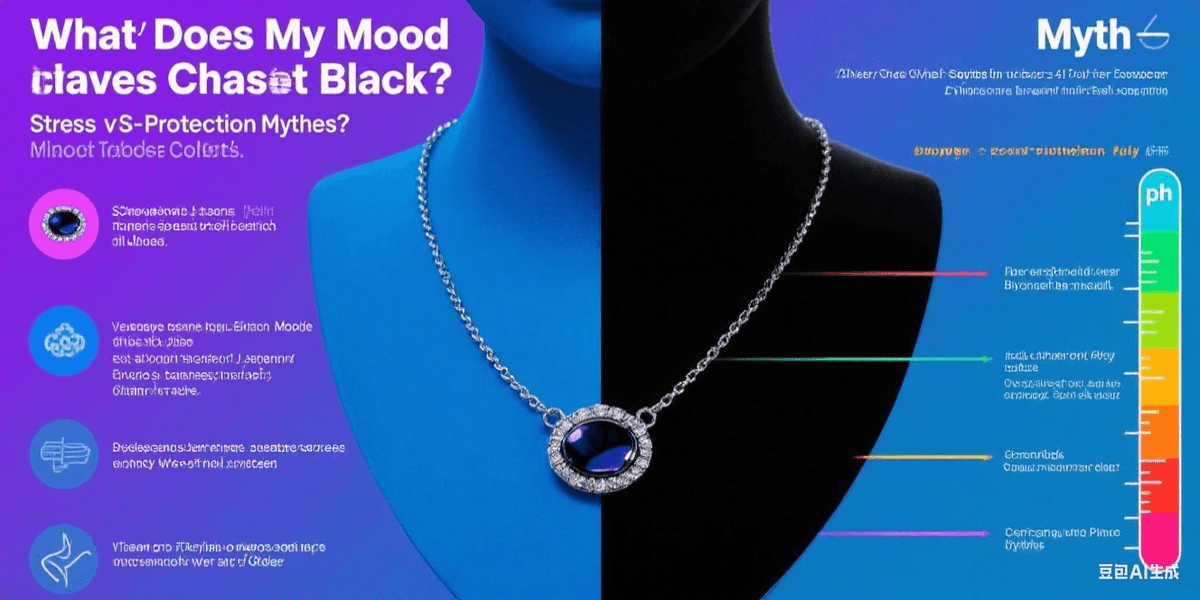
Why Does My Mood Necklace Turn Black? Stress vs. Protection Myths
Black usually means the stone is in a cooler or inactive temperature band—often cold air, the pendant off your skin, or product calibration—not a medical mood reading.
Discover the latest insights on color psychology, mood jewelry trends, and emotional wellness

Black usually means the stone is in a cooler or inactive temperature band—often cold air, the pendant off your skin, or product calibration—not a medical mood reading.

Gentle cleaning, mild soap, and drying tips that protect thermochromic stones—always follow your maker’s care sheet when in doubt.

Necklaces and rings use the same thermochromic idea but sit on different body zones—expect different thermal noise, not a winner on “emotion accuracy.”
Blue on the chart is often tied to calm or low energy in folklore; physically it is one temperature band—separate chart stories from what the stone actually measures.
Seasons change room temperature, clothing layers, and sun on your skin—so your pendant’s colors shift with the environment, not proof of a seasonal “mood cycle.”
Green is a popular chart color for balance and growth; treat it as a cultural cue after you account for warmth, drafts, and how long the stone touches skin.
Articles about the psychology and science behind color perception and mood jewelry
Guides on cleaning, maintaining, and caring for your mood jewelry
Scientific explanations behind thermochromic crystals and mood jewelry technology
Self-reflection ideas around color and routine—mood jewelry reads temperature, not clinical mood